Flatfoot collapse is not one problem, it is a pattern of failures that show up in bones, joints, tendons, and ligaments all at once. When the medial arch sags, the heel drifts outward, and the forefoot abducts, the load shifts, stride length shortens, and the ankle often starts to ache along its inner or outer edge. Some patients still manage weekend hikes and only notice fatigue by afternoon. Others arrive after months of swelling, a hard time fitting shoes, and pain that radiates into the calf. The art, and it is an art grounded in anatomy and biomechanics, lies in matching what we see on imaging to what we see in the exam room, then building a plan that restores structure and function without overcorrecting.
I write here from the perspective of a foot and ankle corrective surgery expert who has treated the spectrum of flatfoot, from flexible adolescent deformity to rigid adult acquired flatfoot arthritis. While the names vary - posterior tibial tendon dysfunction, stage II adult acquired flatfoot deformity, peritalar subluxation - the principles remain consistent. A foot and ankle surgical specialist starts with alignment and stability, then layers in tendon balance and joint preservation. The sequence matters.
What “collapse” actually means
Healthy feet share load across three points, heel, first metatarsal head, fifth metatarsal head, with the midfoot and hindfoot forming a stable tripod. In flatfoot collapse, the posterior tibial tendon weakens or tears, the spring ligament complex stretches, and the talus tilts down and inward. The calcaneus drifts into valgus, the navicular slides off the talar head, and the forefoot swings laterally. You will often see an arch that reappears when the patient stands on tiptoe if the deformity is still flexible. In stiffer cases, the arch does not rebound because the joints have worn into an altered position.
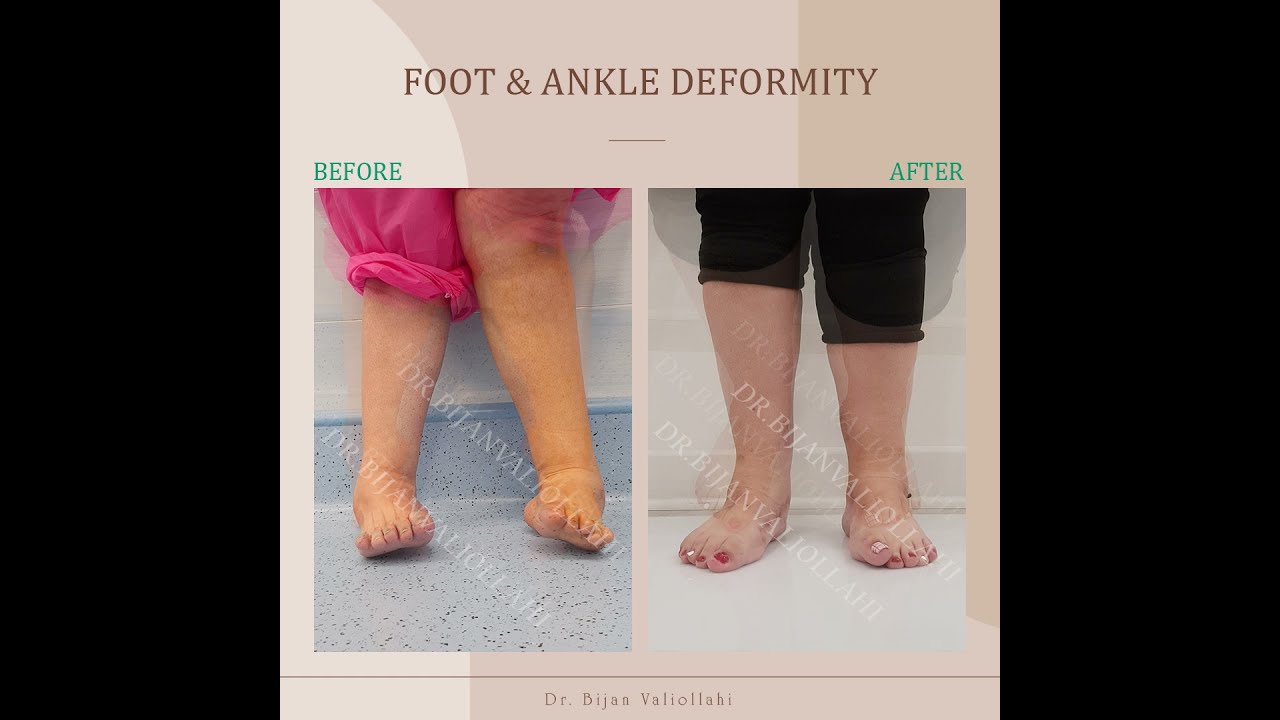
Pain patterns follow the structure. Medial ankle pain points toward posterior tibial tendon strain or a spring ligament sprain. Lateral impingement pain suggests the calcaneus hitting the fibula or sinus tarsi compression as the subtalar joint tips. Forefoot pain under the second or third metatarsal often comes from compensation after the first ray dorsiflexes. Once you understand which link failed first, you can choose the right fix.
The exam that guides the plan
Every flatfoot patient I see receives a deliberate, reproducible workup. I watch gait barefoot and in shoes. I look for medial arch collapse during midstance and forefoot abduction, the too many toes sign. I confirm if a single heel rise recreates the arch and inverts the heel. I palpate along the posterior tibial tendon and spring ligament, then check subtalar and midfoot mobility, especially the first tarsometatarsal joint. I measure ankle dorsiflexion with the knee flexed and extended, since gastrocnemius tightness can magnify deformity.
Weightbearing radiographs are nonnegotiable. Nonweightbearing films hide the problem. On lateral views, I evaluate Meary’s angle, calcaneal pitch, and talar uncoverage. On the AP view, I check talonavicular coverage and forefoot abduction. When pain is focal and the stages unclear, I supplement with weightbearing CT, which shows peritalar subluxation and subtle collapse under load. Ultrasound helps assess posterior tibial tendon thickness and tears in clinic. MRI can clarify partial tearing of the tendon or spring ligament in intermediate cases, and helps to plan graft length and anchor placement when I intend to reconstruct soft tissues.
Early-stage care still matters
Not every flatfoot needs the operating room. A foot and ankle surgical provider will often exhaust structured, time-bound conservative care when the deformity is flexible and arthritis is absent. That includes an orthotic that posts the heel, supports the medial arch, and restores first ray purchase. I combine this with a dedicated posterior chain program that addresses calf tightness and strengthens the posterior tibial and peroneal balance. Footwear with a stiff shank and a mild rocker sole reduces midfoot strain during push off. When swelling dominates and the tendon is acutely inflamed, a period of immobilization, typically 3 to 6 weeks in a boot, gives tissue a chance to calm down.
The key is honest follow up. If the patient still has pain or persistent deformity despite 8 to 12 weeks of targeted treatment, a foot and ankle surgery physician should discuss operative options. Waiting years rarely helps. The tendon lengthens, the ligaments stretch further, and joints that could have been preserved start to degenerate.
How a surgeon stages the deformity
Staging systems, like Johnson and Strom with Myerson’s modifications, organize thinking. Stage I means tendon inflammation without deformity. Stage II is flexible deformity, subdivided by severity and forefoot rigidity. Stage III indicates rigid flatfoot with subtalar arthritis. Stage IV adds ankle involvement, with deltoid ligament insufficiency and talar tilt within the mortise. A foot and ankle surgery authority does not recite these for show, we use them to choose operations that fix each failed component.
For example, a Stage IIa flexible flatfoot with minimal forefoot abduction often does well with a medializing calcaneal osteotomy and posterior tibial tendon debridement with a flexor digitorum longus transfer. A Stage IIb with marked abduction needs lateral column lengthening to correct the talonavicular joint coverage, often combined with spring ligament reconstruction. A Stage II with a rigid forefoot varus needs cotton osteotomy or first tarsometatarsal plantarflexion fusion to restore tripod balance. Once arthritis sets into the subtalar or talonavicular joints, joint-sparing work becomes less effective, and a foot and ankle reconstructive surgeon considers fusion to eliminate painful motion.
The surgical toolbox, chosen with restraint
Operations for flatfoot are not recipes, they are components that can be combined. The details and sequence matter far more than their names. Here is how a foot and ankle surgery expert typically selects and executes them.
- Medializing calcaneal osteotomy. This is the lever that moves the heel back under the leg. By shifting the posterior calcaneus 6 to 12 millimeters medially, we reduce valgus, unload the lateral column, and restore the pull of the Achilles to a more neutral vector. Fixation is usually a screw or small plate. Patients sense this immediately after recovery as improved push off without the foot collapsing inward. Lateral column lengthening. When the forefoot abducts and the talar head is uncovered, lengthening the anterior calcaneus or lateral cuneiform opens the lateral column, closing the talonavicular joint and resetting the midfoot. The graft size often ranges from 6 to 10 millimeters. A foot and ankle alignment surgeon weighs this carefully, too much lengthening causes lateral foot pain or calcaneocuboid overload. Spring ligament reconstruction. The spring ligament complex floors the talar head. If it is shredded, osteotomies alone may not hold the arch. Suture tape augmentation or tendon graft reconstruction helps control talar head plantarflexion. I use this selectively in patients with MRI-proven rupture or when intraoperative exam shows frank laxity. Tendon transfer. The posterior tibial tendon, once weakened, rarely regains its former strength. Transferring the flexor digitorum longus to the navicular restores active inversion and arch support. I preserve as much viable posterior tibial tendon as possible and integrate the transfer into the native tissue, not as a standalone fix, but as a balance to osteotomies. Gastrocnemius recession or Achilles lengthening. Tight calves sabotage any flatfoot reconstruction by forcing early heel rise and midfoot overload. I prefer a gastrocnemius recession when Silfverskiöld testing shows isolated gastrocnemius tightness. An Achilles lengthening is reserved for global equinus. Overlengthening weakens push off, so measurements and intraoperative tensioning must be precise. Medial cuneiform plantarflexion osteotomy or first tarsometatarsal fusion. If the forefoot stays in varus after hindfoot correction, patients cannot land evenly on the first ray. A plantarflexion osteotomy of the medial cuneiform, the cotton, corrects this without fusion. When hypermobility or arthritis affects the first tarsometatarsal joint, a lapidus style fusion is more durable. Fusion procedures. When joints are arthritic or the deformity is rigid, fusions become the honest choice. A subtalar fusion corrects hindfoot valgus and eliminates painful motion. A talonavicular fusion corrects midfoot collapse and forefoot abduction at the cost of significant motion. A double fusion, subtalar and talonavicular, or triple fusion adding the calcaneocuboid joint, stabilizes a severely deformed foot. A foot and ankle reconstruction surgeon aims for the fewest joints fused to achieve a plantigrade, pain free foot.
A foot and ankle minimally invasive surgeon may use smaller incisions for calcaneal osteotomies or percutaneous techniques when bone quality and deformity allow. Arthroscopy adds value if the ankle or subtalar joint needs debridement. Endoscopic gastrocnemius recession limits scarring and speeds recovery. I do not chase technology for technology’s sake; I match approach to anatomy and risk.
Case snapshots that teach
A 47 year old teacher came to clinic after a year of insidious medial ankle pain and new lateral foot aching after long days. Exam showed flexible valgus with forefoot abduction and a weak single heel raise. Weightbearing radiographs revealed 35 percent talar uncoverage and increased Meary’s angle. We started with a brace and therapy for eight weeks. Pain improved but deformity persisted. In surgery, a medializing calcaneal osteotomy of 8 millimeters corrected heel valgus, a 7 millimeter lateral column lengthening reduced talonavicular uncoverage, and the flexor digitorum longus was transferred to augment a frayed posterior tibial tendon. At six months she was back to full duty, hiking on weekends, and her lateral impingement pain had resolved.
A 62 year old carpenter presented after years of progressive collapse with rigid valgus, limited subtalar motion, and dorsal midfoot arthritis. Radiographs showed near complete talar uncoverage and subtalar sclerosis. For him, joint-sparing work would have underdelivered. I performed a subtalar and talonavicular fusion with careful hindfoot alignment to mild valgus and a mild plantarflexion of the talar head to recreate arch contour. He returned to light duty at 12 weeks and reported less fatigue because the foot was finally stable under load, even though certain side to side motions were gone.
These examples underscore the principle that a foot and ankle surgical consultant chooses structure first. Tendons cannot out-pull poor alignment.
How recovery actually unfolds
Timelines vary by the specific mix of procedures. For most osteotomy and tendon reconstruction combinations, expect six weeks nonweightbearing in a splint then a boot, then progressive weightbearing over 4 to 6 weeks. At around 10 to 12 weeks, we transition to supportive shoes with an insert. Strength work begins as soon as the osteotomies show healing on radiographs, usually by week eight to ten. Return to long walks comes by three to four months, running or sport by six to nine months, with full remodeling and strength peaking closer to a year.
Fusions demand patience. Most require eight to ten weeks nonweightbearing for solid union, sometimes longer in smokers or those with diabetes. A foot and ankle operative surgeon will monitor with serial weightbearing radiographs. If bone quality is marginal, we supplement with bone graft or stimulators. The reward for the wait is predictable pain relief.

Pain control is planned in layers. Regional anesthesia at surgery reduces narcotic needs for the first 24 to 48 hours. I combine scheduled acetaminophen and anti inflammatories if the patient’s stomach and kidneys allow, then reserve narcotics for breakthrough pain in the first week. Elevation is not a suggestion, it is a treatment. Most patients underestimate how much swelling drives pain; a strict elevation plan changes the first two weeks.
Risks that deserve frank discussion
Any foot and ankle surgical professional who has been in practice long enough will have seen the full range of complications. Candid consent improves trust and outcomes. Wound healing challenges are more common along the lateral calcaneal incision and among smokers or those with peripheral vascular disease. Nerve irritation can appear as numbness or tingling along the sural or saphenous distributions and usually fades, but rarely persists. Nonunion is uncommon in healthy bone with rigid fixation but still possible, especially at the lateral column lengthening or in fusions. Overcorrection into varus is rare but debilitating, which is why intraoperative alignment checks, often with fluoroscopy and external alignment rods, matter.
I also warn about undercorrection when choices are timid. A medializing calcaneal shift that is too small, or a missed forefoot varus that goes unaddressed, can leave a patient comfortable at rest but unhappy during activity. As a foot and ankle surgery planning specialist, I prefer to stack smaller, anatomically respectful corrections rather than any single dramatic cut, but the sum must match the deformity.
Nuances that separate good from great outcomes
Experience teaches judgment. Here are a few practical lessons I share with fellows and residents in a foot and ankle surgical practice.
- Do not skip calf assessment. If dorsiflexion is limited, add a recession. It protects the reconstruction and smooths gait. Respect the first ray. After hindfoot correction, reassess the forefoot. Plantarflex the medial column if it stays in varus. Otherwise the patient will pivot off the second metatarsal and return with calluses and metatarsalgia. Choose graft size by coverage, not by habit. Use intraoperative talonavicular coverage views to calibrate lateral column lengthening. A millimeter matters. Preserve blood supply. Gentle soft tissue handling around the calcaneus and navicular reduces wound issues and speeds healing. Build a postoperative map. Patients who understand weeks, milestones, and red flags do better. I hand them a one page timeline they can put on the refrigerator.
When advanced imaging or techniques change the plan
Weightbearing CT has shifted how I approach revision and complex primary cases. It quantifies peritalar subluxation and reveals rotational components that standard radiographs miss. In a foot and ankle complex surgery surgeon’s hands, this can prevent surprises, like a hidden medial column collapse that demands a larger cotton osteotomy than expected. Three dimensional reconstructions are particularly helpful when previous hardware, a malunited calcaneal fracture, or congenital coalition distorts normal landmarks.
Minimally invasive osteotomies through percutaneous approaches reduce soft tissue disruption, but only when the deformity is moderate and bone quality is solid. When lateral column lengthening is planned, I still use an open approach to protect the superficial peroneal nerve and ensure graft placement and fixation are perfect. A foot and ankle precision surgeon knows when to go small and when to open.
Working as a team around the patient
No single clinician solves flatfoot collapse. A foot and ankle surgery team that includes a skilled physical therapist, orthotist, and nursing staff closes gaps patients otherwise fall through. The therapist educates on gait mechanics and progressive loading. The orthotist fine tunes inserts to accommodate swelling changes over months. Nursing staff coach on elevation, incision care, and opioid tapering. In a foot and ankle surgical group with high volumes, these processes become second nature, and the complication rate drops because everyone notices early warning signs, like skin maceration under a boot liner or swelling that has not budged by the end of week one.
Referring providers matter as well. A primary care physician or sports medicine colleague who recognizes posterior tibial tendon strain early can send a patient to a foot and ankle surgery referral specialist before the joints degenerate. That simple timing decision can be the difference between joint-sparing reconstruction and a triple fusion.
Expectations that match real life
Patients often ask two things: Will my foot look normal, and when can I get back to the things I love? I answer plainly. The goal is a foot that is straight enough to share load across the tripod, stable enough to walk all day without swelling, and strong enough to push off without pain. For many, that also looks more normal, but I aim for function first. As for the timeline, most office workers return at four to six weeks in a boot, field or standing jobs at ten to twelve weeks in a brace and supportive shoe, and vigorous recreational activity between six and nine months depending on the procedures performed and their baseline fitness.
Runners and hikers often return to form, but it takes discipline. Interval progression, careful terrain choices early, and attention to calf strength and single leg control make the difference. Those with fusions can still hike long distances. Side to side agility work is more limited, yet many adapt and enjoy the bulk of their activities without pain.
Special scenarios that demand extra care
Diabetes, inflammatory arthritis, and obesity change the calculus. Diabetics need strict glucose management before surgery to reduce infection and nonunion risk. Inflammatory conditions often benefit from medical optimization before we reconstruct, and sometimes softer tissues need augmented reconstruction with internal bracing. Heavier patients can still win with reconstruction, but implants and graft sizes must be chosen to withstand higher loads, and I plan longer protected weightbearing.
Revision cases after failed flatfoot surgery are their own category. A foot and ankle revision surgery specialist must obtain weightbearing CT, review prior op notes, and expect to combine osteotomy corrections with selective fusions. Scar management, hardware removal, and bone grafting become part of the plan. Even then, the aim remains the same, plantigrade alignment and durable function.
Choosing the right surgeon and center
Outcomes improve when the surgeon performs these operations regularly. Ask a prospective foot and ankle surgical clinician how often they reconstruct flexible flatfoot, how they decide between joint-sparing and fusion work, and how they manage complications. A foot and ankle surgery center specialist with established protocols for pain control, DVT prophylaxis tailored to your risk, and structured rehabilitation typically delivers smoother recoveries.
Titles vary. You may encounter a foot and ankle MD surgeon or a foot and ankle DPM surgeon, an orthopedic foot and ankle specialist surgeon or a podiatric foot and ankle operative practitioner. What matters is training, experience, and a thoughtful, individualized plan. Look for a foot and ankle surgical authority who listens, examines carefully, and explains the rationale for each component of the reconstruction.
A focused, practical checklist before deciding on surgery
- Confirm flexible versus rigid deformity with a single heel rise and passive subtalar motion. Get weightbearing radiographs, and consider weightbearing CT if the plan is unclear or prior surgery exists. Trial a structured conservative program for 8 to 12 weeks when joints are healthy and deformity is mild. Choose a surgeon who regularly performs calcaneal osteotomies, tendon transfers, and fusions, and who discusses forefoot correction, not just hindfoot work. Plan your life for the first 6 to 10 weeks, including home setup for elevation, transport, and help with errands.
The bottom line from years in the operating room
Flatfoot collapse looks simple from across the room. Up close it is a set of linked failures, and you earn good results by repairing each link in order. A foot and ankle operative doctor begins with alignment, uses tendon transfers to restore dynamic support, and corrects the forefoot so the tripod returns. When joints are too far gone, fusion provides honest relief, not a compromise. The recovery is measured in months, but foot and ankle surgeon near me for most patients the trade is clear, a stable, pain free foot that lets them stand at work, walk with family, and take the stairs without thinking about every step.
If your arch has fallen and shoes no longer feel right, do not wait until the foot stiffens. See a foot and ankle surgical provider who will examine carefully, image under load, and map a path that matches your anatomy and your goals. That is how we turn collapse into control, not by a single heroic cut, but by a sequence of precise corrections, chosen by a foot and ankle corrective surgery expert who treats feet as they are, not as diagrams.